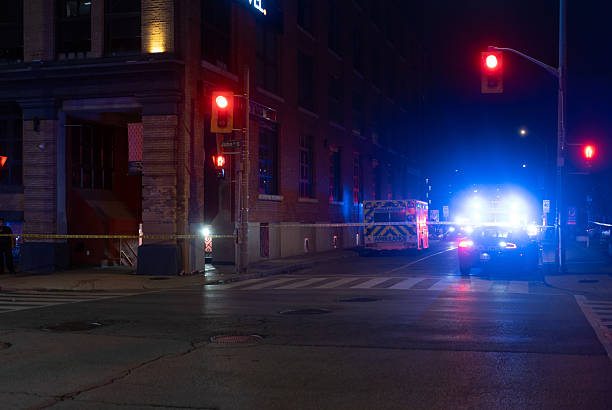
Washington, D.C. – A chaotic and tragic shooting incident near the White House has left two people dead, including Nasir Best, 21, who has been identified by authorities as the suspect in the case. The gunfire, which erupted in one of the most heavily secured and closely monitored areas in the United States, also claimed the life of an innocent bystander, prompting a massive law enforcement response and raising urgent questions about security, mental health, and the circumstances that led to the violence.
According to officials involved in the investigation, Nasir Best died following the shooting incident that occurred near the White House complex. Authorities confirmed that Best was identified as the suspect in a case that also left a bystander dead, marking a tragic outcome that has sent shockwaves through the nation’s capital and beyond. The incident unfolded suddenly, turning a routine day in the presidential neighborhood into a scene of chaos, emergency sirens, and a swift, overwhelming response from security personnel.
The Shooting Incident: What We Know
Law enforcement reported that the incident began when gunfire erupted near the White House complex. The exact location, while not publicly pinpointed by officials to protect the integrity of the investigation, is believed to be within close proximity to the secure perimeter that surrounds the executive mansion. The sound of shots in such a sensitive area immediately triggered a massive law enforcement response, with U.S. Secret Service, Metropolitan Police Department (MPD) officers, and federal agents converging on the scene within minutes.
During the event, chaos ensued as bystanders scrambled for cover and security personnel worked to neutralize the threat. Tragically, a bystander was struck by gunfire and later died from their injuries. The identity of the bystander has not yet been publicly released by authorities, pending family notification. However, officials have extended their deepest condolences to the victim’s family, noting that the death of an innocent person remains the central focus of the tragedy.
Officials stated that Nasir Best was taken into custody shortly after the shooting. However, subsequent reports confirmed that Best later died from injuries sustained during the incident. The precise cause and timing of his death have not been fully detailed by authorities, though it is standard procedure for the D.C. Office of the Chief Medical Examiner to conduct autopsies in such cases. It remains unclear whether Best died from self-inflicted injuries, from return fire by law enforcement, or from other causes related to the shooting. Officials have emphasized that the case remains active and under review.
Erratic Behavior and Mental Health Concerns
During the early stages of the investigation, authorities said Best displayed erratic behavior and allegedly made statements claiming he believed he was Jesus Christ. These reported statements have drawn significant attention from investigators, mental health experts, and the public, as they may point to underlying psychological factors that contributed to the tragedy.
Officials have noted that these reported statements are being reviewed as part of a broader examination of mental health factors, witness accounts, and forensic evidence. Investigators are currently working to determine whether Nasir Best had a documented history of mental illness, whether he was under the influence of any substances at the time of the shooting, and whether any prior interactions with law enforcement or mental health services might have provided warning signs.
“This is a deeply tragic and complex case,” said a senior law enforcement official who spoke on condition of anonymity due to the ongoing investigation. “We are looking at every possible angle, including the suspect’s mental state. The statements he made about being Jesus Christ are concerning and are being taken very seriously as we try to understand what led to this horrific event.”
Mental health advocates have noted that such grandiose delusions—believing oneself to be a divine or historically significant figure—can be associated with severe psychiatric conditions, including schizophrenia, bipolar disorder with psychotic features, or other forms of psychosis. However, officials have cautioned against drawing conclusions before a full psychological autopsy and investigation are completed.
The Bystander: An Innocent Life Lost
While much of the initial reporting has focused on Nasir Best and his alleged statements, authorities have repeatedly emphasized that the death of the bystander is the central tragedy of this incident. The victim, whose name has not yet been released, was simply in the wrong place at the wrong time—an innocent individual whose life was cut short by senseless violence near the most famous address in America.
Condolences have been extended to the victim’s family as the investigation continues. Mayor Muriel Bowser of Washington, D.C., issued a brief statement expressing grief and calling for patience as authorities piece together the facts. “Our city mourns the loss of an innocent life today. The area near the White House should be a place of safety, not violence. We stand with the victim’s family and will ensure a thorough investigation,” the statement read.
A makeshift memorial has reportedly been established near the scene, with flowers, candles, and handwritten notes left by residents and visitors alike. One note read: “You didn’t deserve this. Rest in peace, stranger. We are so sorry.”
Law Enforcement Response and Increased Security
Following the incident, federal and local law enforcement agencies increased security in the surrounding area while continuing to investigate the circumstances that led to the shooting. The U.S. Secret Service, which has primary jurisdiction over the White House complex and its immediate vicinity, has not released detailed operational information, citing ongoing security protocols and the active investigation.
However, sources indicate that additional checkpoints, increased patrols, and heightened surveillance measures have been implemented in the area. Tourists and visitors to the nation’s capital have been advised to expect delays and to remain vigilant, though officials have stressed that there is no ongoing threat to the public.
The Metropolitan Police Department (MPD) has taken the lead on certain aspects of the investigation, working in coordination with federal partners, including the FBI and the Bureau of Alcohol, Tobacco, Firearms and Explosives (ATF). Investigators are currently reviewing surveillance footage from the area, interviewing witnesses, and analyzing forensic evidence, including shell casings, firearm residue, and any digital evidence from mobile phones or social media accounts belonging to Nasir Best.
Motive and Investigation Status
Officials have not released a confirmed motive and have emphasized that the case remains active and under review. Investigators are exploring several possibilities, including whether Best intentionally targeted the White House or specific individuals, whether he acted alone, and whether his mental state played a primary role in the incident.
Thus far, no known manifesto, social media posts, or communications have been publicly linked to Nasir Best that would indicate a political or ideological motive. However, authorities are actively reviewing his digital footprint, including his online activity, phone records, and any interactions with friends, family, or acquaintances in the days and weeks leading up to the shooting.
“We cannot rule anything out at this point,” a federal investigator told reporters. “We are looking at everything—mental health, possible radicalization, personal grievances, or random violence. The statements about being Jesus Christ are unusual, but they may or may not explain what happened. We need more time.”
Mental Health and Gun Violence: A Broader Conversation
The death of Nasir Best and the innocent bystander has reignited a broader national conversation about the intersection of mental health, gun violence, and public safety. Advocates have pointed out that incidents involving individuals experiencing psychotic episodes are tragically common in the United States, where access to mental health care remains uneven and where firearms can be obtained by those who may pose a danger to themselves or others.
Dr. Elena Vasquez, a forensic psychiatrist based in Washington, D.C., who is not involved in the case, offered insight into the possible mental health dimensions. “Statements about being Jesus Christ or other delusions of grandeur are classic psychotic symptoms. That doesn’t mean the individual is violent—most people with psychosis are not dangerous. But when psychosis combines with access to a firearm and a trigger event, the results can be catastrophic. This case underscores the urgent need for better mental health crisis intervention and for keeping firearms out of the hands of individuals in acute psychiatric distress.”
Law enforcement officials have noted that interactions with individuals experiencing mental health crises are among the most challenging and dangerous scenarios for police. Many departments, including MPD, have implemented crisis intervention team (CIT) training, but the speed and chaos of an active shooting situation can limit the effectiveness of such approaches.
What Happens Next
As the investigation continues, authorities are expected to release further updates as more verified information becomes available. The D.C. Office of the Chief Medical Examiner will determine the official cause and manner of death for both Nasir Best and the unidentified bystander. These reports, once completed, may provide additional clarity regarding the sequence of events and whether Best’s death resulted from law enforcement action, self-inflicted injury, or other causes.
Additionally, any body-worn camera footage from responding officers, surveillance video from the scene, and audio recordings of the incident may be released in the coming weeks, either through public records requests or as part of an official investigative summary. However, officials have cautioned that releasing such materials too early could compromise the investigation or violate the privacy of the victims and their families.
The family of Nasir Best has not yet issued a public statement. It is unknown whether he had a history of mental illness, prior arrests, or known connections to the Washington, D.C., area. Attempts to reach relatives through social media and public records have so far been unsuccessful.
Mourning and Reflection
In the meantime, the city of Washington, D.C., and the nation as a whole are left to mourn two lives lost under extraordinarily tragic circumstances. The bystander—a person whose identity remains unknown to the public for now—died simply because they were present near the White House at the wrong moment. Nasir Best, only 21 years old, also died, leaving behind unanswered questions about what drove him to violence and whether his death could have been prevented with better mental health support.
“This is a tragedy on multiple levels,” said Reverend Alisha Thomas, a community activist in D.C. “An innocent person is gone. A young man is gone. And a lot of families are destroyed. We need to ask hard questions about how we treat mental illness in this country and how we keep guns away from people who are clearly in crisis.”
As the sun sets over the White House—a building that symbolizes democracy, power, and resilience—the area near the shooting remains marked by police tape and solemn silence. For now, the nation waits for answers, while two families begin the unbearable process of grieving.
Ongoing Coverage
This is a developing story. The Metropolitan Police Department (MPD) , the U.S. Secret Service, and the D.C. Office of the Chief Medical Examiner are expected to release additional information as it becomes available. The identity of the deceased bystander will be released following family notification. Further updates regarding mental health evaluations, forensic findings, and any potential charges (posthumously or otherwise) will be reported as the investigation progresses.
Leave a Reply