In the high-octane world of the Indy Racing League (IRL) , the late 1990s were a time of fierce competition, breathtaking speeds, and larger-than-life personalities. Among the most promising of those rising stars was Sam Schmidt, a driver from Lincoln, Nebraska, who possessed a rare combination of raw talent, analytical precision, and relentless ambition. By 1999, Schmidt had done what few drivers achieve: he won a race from the pole position, conquered the legendary Indianapolis 500 qualifying rounds, and positioned himself as a genuine contender for the 2000 season.
But on January 6, 2000, everything changed. During an innocuous testing session at a small track in Florida, Schmidt’s car spun, crashed backward into a retaining wall, and shattered his spinal cord. The Sam Schmidt Indianapolis accident would leave him paralyzed from the neck down, ending his driving career in an instant. Yet, remarkably, that moment of tragedy did not mark the end of Sam Schmidt’s story. It marked the beginning of a new one—a journey of resilience, engineering innovation, and championship-winning team ownership that would inspire millions.
The 2000 Testing Session at Walt Disney World Speedway
The date was January 6, 2000. The location was the Walt Disney World Speedway in Orlando, Florida—a 1-mile, tri-oval track that had hosted IRL events since 1996. It was a routine open test session, the kind that happens dozens of times each offseason. Drivers were shaking down their cars, testing suspension setups, and preparing for the grueling season ahead. Sam Schmidt was behind the wheel of his car for Team Pelfrey, focused on data collection and lap times.
According to eyewitness accounts and subsequent accident investigations, Schmidt was entering a turn at approximately 150 miles per hour when something went wrong. The car snapped loose—oversteering violently. Schmidt counter-steered, a reflex drilled into every open-wheel driver, but the car did not respond. It spun 180 degrees, facing backward, and continued its trajectory toward the unforgiving concrete retaining wall.
The impact was catastrophic—not in terms of fire or debris, but in terms of physics. Schmidt’s car struck the wall nearly head-on, but backward. The deceleration forces slammed his helmeted head forward and then backward with violent force, compressing his spine. Unlike a frontal crash where the HANS device and seat belts absorb energy, a backward impact leaves the neck uniquely vulnerable.
Emergency Response and Immediate Injuries
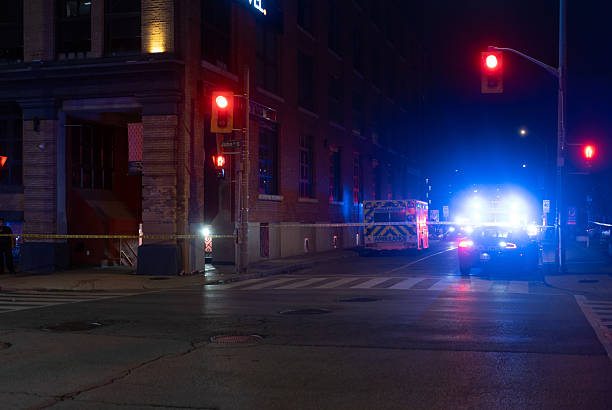
Track safety crews, among the best in the world, were on the scene within seconds. They extracted Sam Schmidt from the cockpit with extreme care, recognizing immediately that he had suffered a severe spinal injury. He was airlifted to Orlando Regional Medical Center, one of Florida’s top trauma centers.
Doctors later delivered the devastating news: Schmidt had fractured and dislocated the C3 and C4 vertebrae in his neck. These vertebrae sit high in the spinal column, just below the skull. Injuries at this level typically result in quadriplegia—paralysis of all four limbs and the torso. The comparison made by medical professionals was immediate and haunting: Schmidt’s injury was nearly identical to that suffered by actor Christopher Reeve, who had been paralyzed five years earlier in a horse riding accident.
Emergency surgery was performed to stabilize Schmidt’s spine using metal rods and screws. The surgery saved his life, but it could not restore function. Sam Schmidt was told he would never walk again. He would never shift gears, never grip a steering wheel, never feel the G-forces of a race car pushing him into his seat.
Sam Schmidt’s Racing Career Before the Crash
To understand the magnitude of the loss, one must appreciate the driver Sam Schmidt was before January 6, 2000.
Born in 1964, Schmidt did not come up through the traditional European open-wheel ladder. He was an American racer who clawed his way up through the Formula Ford, Formula Atlantic, and Indy Lights systems. He made his Indy Racing League debut in 1997, driving for Blueprint Racing. While his rookie season was inconsistent, he showed flashes of speed.
The breakthrough arrived in 1999. Driving for Treadway Racing, Schmidt qualified on the pole for the Vegas.com 500 at Las Vegas Motor Speedway. He led wire-to-wire, dominating the field and securing his first career IRL victory. It was a statement win—proof that he belonged among the sport’s elite.
That same year, Schmidt accomplished a dream: he qualified for the Indianapolis 500. He went on to compete in three consecutive Indy 500s (1999, 2000 would have been his fourth), earning respect for his smooth driving style and technical feedback. Team owners described him as a “driver’s driver”—someone who could identify a suspension flaw in two laps and communicate it clearly to engineers. He was poised for a breakout 2000 season. Instead, the testing crash rewrote his future.
Life as a Quadriplegic: The Dark Days
The months following the Sam Schmidt Indianapolis accident were brutal. After the initial hospitalization, he was transferred to a spinal cord rehabilitation center. The physical pain was constant—nerve pain, muscle spasms, bedsores, and the indignity of needing help for every bodily function. But the psychological pain was worse.
Schmidt later admitted in interviews that he contemplated suicide during his darkest moments. He felt useless. He could not hug his young children properly. He could not open a door. He could not scratch an itch. The driver who had commanded a 200-mph machine was now confined to a hospital bed, unable to move his fingers.
What saved Sam Schmidt was not a miracle cure—it was a decision. He decided that if he could not drive race cars, he would own them. If he could not feel the thrill of victory in his own hands, he would feel it through his drivers. And if he could not walk, he would walk forward in every other way possible.
The Birth of Sam Schmidt Motorsports
In 2001, just one year after his crash, Sam Schmidt founded Sam Schmidt Motorsports (SSM) from his hospital bed. Starting with a single car in the Indy Lights developmental series, the team faced immediate skepticism. Critics wondered: How could a quadriplegic owner run a race team? Who would take him seriously?
Schmidt answered by hiring excellent people and winning races. In 2002, SSM won its first Indy Lights race. By 2004, the team captured the Indy Lights championship. Over the next decade, Sam Schmidt Motorsports became the gold standard of the Indy Lights ladder, developing future IndyCar stars like Jay Howard, Alex Lloyd, and James Hinchcliffe.
The team evolved into Schmidt Peterson Motorsports and later entered a technical partnership with Arrow Electronics and McLaren Racing, eventually becoming Arrow McLaren. Under Schmidt’s leadership as founder and majority owner, the organization has won multiple IndyCar races, captured Indianapolis 500 pole positions, and finished on the podium at the Greatest Spectacle in Racing. His drivers have included Simon Pagenaud, Robert Wickens, and Pato O’Ward. The team that began as a paralyzed man’s dream now competes at the highest level of American open-wheel racing.
Advocacy: Conquer Paralysis Now
Beyond the racetrack, Sam Schmidt became a tireless advocate for spinal cord injury research. He founded the Conquer Paralysis Now organization, which funds cutting-edge neurological research, rehabilitation technology, and clinical trials. The organization has raised millions of dollars to support projects ranging from epidural stimulation to robotic exoskeletons.
Schmidt also worked closely with the Christopher & Dana Reeve Foundation, honoring the actor whose injury paralleled his own. Together, they pushed for increased federal funding for paralysis research and greater accessibility in public spaces.
The Semi-Autonomous Corvette: Driving Again
In 2014, Sam Schmidt made global headlines once again. Working with Arrow Electronics engineers, he got behind the wheel of a specially modified Chevrolet Corvette C7 Stingray. The car was equipped with a semi-autonomous control system that allowed Schmidt to drive using only his head movements. Sensors in his helmet tracked his head tilt to steer, and he used a sip-and-puff tube to control acceleration and braking.
The demonstration took place at the hallowed Indianapolis Motor Speedway—the same track where Schmidt had once raced as an able-bodied driver, and where he had later cheered his team to victory from the pit box. As the Corvette rolled onto the 2.5-mile oval, Schmidt’s eyes filled with tears. He completed several laps, reaching speeds of over 100 mph. It was not a race, but it was a revolution.
Schmidt later said, “I never thought I’d feel that again—the vibration of the wheel, the rush of the straightaway. Technology gave me back a piece of my soul.”
The 2023 Arrow McLaren Partnership and Continued Legacy
More than two decades after the crash that paralyzed him, Sam Schmidt remains actively involved in motorsports. In 2023, his organization completed its transition into Arrow McLaren as a co-owner alongside McLaren Racing CEO Zak Brown. The team now fields multiple full-time entries in the NTT IndyCar Series and is considered a perennial championship contender.
Schmidt continues to attend races, sitting in his wheelchair on the pit box, calling strategy, and mentoring young drivers. His voice, amplified by a microphone, directs pit stops and tire choices. His eyes, still sharp as ever, analyze data screens displaying telemetry and lap times. His body is paralyzed, but his mind remains a race car.
The Unanswered Question: What If?
Motorsports fans often wonder: what would Sam Schmidt have achieved as a driver if not for the Indianapolis accident? The consensus among his peers is that he would have won multiple IndyCar races and likely competed for an Indy 500 victory. Some believe he had the talent to follow in the footsteps of Al Unser Jr. or Bobby Rahal.
But Schmidt himself rarely engages in that hypothetical. He has stated publicly: “The crash gave me a different purpose. I think I’m more impactful as a team owner and advocate than I ever would have been as just another driver. I don’t dwell on the ‘what if.’ I focus on the ‘what is.’”
Conclusion: The Crash Did Not Define Him
The Sam Schmidt Indianapolis accident remains one of the most tragic moments in motorsports history—a promising career cut short by a split-second loss of control. But the story did not end in a hospital bed. Sam Schmidt refused to let paralysis define him. He became a championship team owner. He became a pioneer in assistive driving technology. He became a global advocate for spinal cord research.
Today, when fans walk through the paddock at the Indianapolis 500 and see the Arrow McLaren haulers, they are witnessing the legacy of a man who crashed but never quit. Sam Schmidt cannot walk. He cannot shake your hand. But he can win races. And in the world of motorsports, that is everything.
If you or someone you know is struggling with paralysis, spinal cord injury, or associated depression, visit the Conquer Paralysis Now website for resources and support.
Leave a Reply