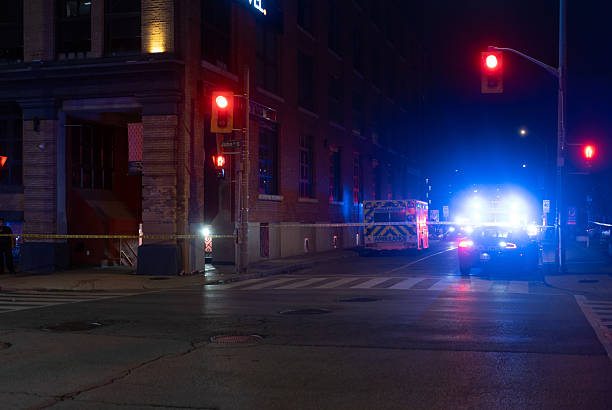
BERNVILLE, Pa. — A quiet stretch of Bernville Road in northern Berks County became the scene of a devastating single-vehicle tragedy early Sunday morning, claiming the life of a 23-year-old passenger and leaving a community searching for answers. The Pennsylvania State Police have confirmed that Keenan Cryts, a young man whose name has since reverberated through local grief circles, died following a violent tree crash involving a black Tesla sedan. The driver, a 23-year-old man from Pottsville, is now suspected of driving under the influence of alcohol and/or drugs.
The fatal chain of events unfolded in the pre-dawn darkness of May 24, 2026, a time when Bernville Road—officially designated as State Route 183—typically sees little traffic save for the occasional delivery truck or shift worker heading home. At approximately 1:56 a.m., that silence was shattered by the sound of shearing metal and splintering wood.
According to the initial incident report released by the Pennsylvania State Police’s Reading barracks, the black Tesla was traveling southbound along SR 183 just north of the intersection with North 4th Street. For reasons still under active investigation, the vehicle suddenly crossed the solid double-yellow center line, veered into the northbound lane, and left the asphalt entirely. With no guardrail to impede its path, the electric sedan barreled directly into a mature tree situated just beyond the shoulder.
The impact was catastrophic. The front end of the Tesla absorbed the full force of the collision, crumpling inward and triggering the vehicle’s emergency systems. First responders from Bernville Fire Company and surrounding EMS units were dispatched within minutes of the 911 call—a call reportedly made by a passerby who heard the crash from a nearby residence. Upon arrival, they found the driver, still conscious and secured by his seat belt, trapped but breathing. In the passenger seat, however, lay Keenan Cryts, suffering from what witnesses described as “severe, life-threatening trauma.” Critically, investigators would later note that Cryts was not wearing a seat belt at the time of the crash.
A Race Against Time
Emergency medical personnel worked frantically to stabilize both occupants. The driver, whose name has not been publicly released by authorities as of Sunday night, was extracted from the vehicle with moderate injuries. He was transported to a local hospital for evaluation. But the priority was Cryts. An ambulance rushed him to Reading Hospital, the region’s designated Level 1 trauma center, where a team of surgeons and trauma specialists stood ready.
For nearly 21 hours, Keenan Cryts fought for his life. Friends and family members gathered in the hospital’s waiting room, sharing whispered prayers and tearful embraces. But at approximately 11:19 p.m. on Sunday, May 24, the Pennsylvania State Police issued a somber update: Keenan Cryts had succumbed to his injuries. The official time of death was recorded as 11:19 p.m., marking the end of a long day of desperate hope.
The news spread quickly through Pottsville and the wider Schuylkill County community. Social media posts began appearing with Cryts’s photo—a young man described by friends as “always laughing,” “generous to a fault,” and “someone who lit up every room.” By Monday morning, a small memorial of flowers and candles had appeared near the crash site on Bernville Road, tied to the tree that claimed his life.
The DUI Factor
As the reality of Cryts’s death settled in, the Pennsylvania State Police turned their investigative focus toward the driver. In a carefully worded press release issued late Sunday night, authorities stated that the 23-year-old Pottsville man “is suspected of operating the vehicle under the influence of alcohol and/or drugs.”
That single sentence carries immense legal weight in Pennsylvania. Under Title 75 of the Pennsylvania Consolidated Statutes, driving under the influence (DUI) encompasses not just alcohol but also controlled substances, prescription medications that impair driving, and even some over-the-counter drugs. Investigators have not yet specified whether alcohol, marijuana, opioids, or a combination of substances contributed to the crash. What is known is that toxicology tests have been ordered—a standard procedure in fatal crashes—and results can take several weeks to process.
Notably, the driver was wearing his seat belt at the time of the collision. This detail, while seemingly minor, is critical to the reconstruction of the crash. It suggests that the driver was conscious and in control of his body positioning when the Tesla left the roadway. By contrast, Cryts was not restrained. Police have not confirmed whether Cryts was seated properly or if he was asleep, adjusting his position, or moving around the cabin prior to the crash. However, crash reconstruction experts often point out that unbelted passengers become “projectiles” in high-speed collisions, suffering forces that belted occupants may survive.
The Tesla Factor
While the Pennsylvania State Police have not indicated that the vehicle’s make or model contributed to the crash—the initial evidence points to driver impairment as the primary cause—the fact that it was a Tesla has drawn additional scrutiny. Modern Teslas are equipped with an array of safety features, including Autopilot, collision avoidance systems, and a rigid battery-powered chassis that performs exceptionally well in crash tests.
However, no amount of technology can override the laws of physics at high speed, nor can it compensate for an impaired driver’s decision-making. Investigators will likely examine the vehicle’s event data recorder (EDR)—colloquially known as the “black box”—which captures information such as speed, braking, steering angle, and seat belt usage in the seconds before a crash. That data, which Tesla has historically provided to law enforcement upon request, could prove pivotal in determining whether the driver attempted to brake or steer away from the tree.
One question that remains unanswered is whether the Tesla’s automated emergency braking system activated. Under ideal conditions, Tesla’s system can detect obstacles and apply brakes to mitigate or avoid a collision. But these systems have limitations, particularly at night, on curved roads, or when the obstacle is a tree trunk rather than the rear of another vehicle. Impairment of the driver does not necessarily disable the car’s safety systems, but if the driver overrode the system by keeping the accelerator pressed—a known factor in some Tesla crashes—the car may have obeyed the driver’s command over its own programming.
Official Response and Investigation
In the hours following Cryts’s death, the scope of the investigation widened significantly. The Berks County Coroner’s Office was notified and responded to Reading Hospital to formally pronounce death and begin its own inquiry. Meanwhile, the Berks County District Attorney’s Office joined the probe, a standard step when a fatality occurs under circumstances that may involve criminal negligence or vehicular homicide.
As of Sunday night, no charges had been filed against the Pottsville driver. But legal experts familiar with Pennsylvania DUI and vehicular homicide statutes note that the driver could face a range of charges depending on the toxicology results and crash reconstruction findings.
Under Pennsylvania law, if the driver is found to have been under the influence and that impairment is determined to have been a substantial cause of Cryts’s death, the driver could be charged with homicide by vehicle while DUI (Title 75 § 3735). This is a second-degree felony, punishable by up to 10 years in prison and a fine of up to $25,000. In addition, the driver could face separate DUI charges, reckless driving, and possibly involuntary manslaughter depending on the level of recklessness demonstrated.
If the driver’s blood alcohol concentration (BAC) is found to be 0.16% or higher—double the legal limit of 0.08%—mandatory minimum sentences could apply. Pennsylvania abolished many mandatory minimums in recent years, but judges still use BAC levels and aggravating factors (such as a fatality) to determine sentencing.
The Victims and the Community
Behind the legal terminology and accident reconstruction diagrams is a human story of loss. Keenan Cryts, 23, was described by his family as a hardworking young man who had recently begun a new job and was looking forward to summer evenings with friends. In a brief statement released through a family spokesperson, Cryts’s mother said: “Keenan was my sunshine. He didn’t deserve to die on a dark road. Please, don’t drink and drive. Don’t let your friend drink and drive. It’s not worth it.”
Friends have launched a GoFundMe campaign to help cover funeral expenses, though as of Monday morning the family had not announced memorial service details. The campaign organizer, who identified herself as a childhood friend, wrote: “Keenan would give you his last dollar. He loved music, his dog, and his mom. Please help us bring him home.”
The driver, who remains unnamed, is also reportedly receiving medical treatment for his injuries—both physical and emotional. While public anger toward impaired drivers is understandable, those who know the driver have expressed a mix of shock and sorrow. One anonymous source close to the driver told a local news outlet: “He’s devastated. He lost his best friend. But that doesn’t change what happened.”
Road Safety and Bernville Road
The crash site on Bernville Road (SR 183) has a history of serious accidents. According to PennDOT data, this particular stretch—north of North 4th Street—has seen at least 15 crashes in the past decade, several of them involving trees or fixed objects. The road is two lanes with no median, winding through a lightly wooded area with occasional homes and farm driveways. Speed limits range from 35 to 45 mph in the area, though nighttime visibility is poor due to limited street lighting.
Local residents have long called for guardrails, improved signage, or even rumble strips to alert inattentive drivers. After Cryts’s death, those calls have grown louder. A Bernville town council member, speaking on condition of anonymity, said: “We keep writing letters to PennDOT. They keep saying it’s not a priority. How many more people have to die against a tree before it becomes a priority?”
PennDOT has not yet commented on the crash specifically, but a spokesperson previously told the Reading Eagle that SR 183 is evaluated on a points-based system that considers traffic volume, crash history, and severity. Trees within the clear zone—the area beyond the roadway where a driver can recover—are often removed or protected with cable barriers, but many older trees remain.
Next Steps in the Investigation
The Pennsylvania State Police have emphasized that the investigation is “active and ongoing.” Key milestones in the coming weeks will include:
1. Toxicology results from the driver’s blood samples, which will determine the presence and concentration of alcohol and/or drugs.
2. Vehicle data extraction from the Tesla’s EDR, which will provide a second-by-second account of speed, braking, steering, and seat belt status.
3. Crash reconstruction by PSP’s Collision Analysis and Reconstruction Unit, which will calculate estimated speed at impact, point of departure from the roadway, and whether evasive action was possible.
4. Interviews with witnesses, including any passengers in other vehicles or nearby residents who heard or saw the Tesla prior to the crash.
Once these elements are complete, the investigation will be turned over to the Berks County District Attorney’s Office, which will decide whether to file criminal charges. That decision is likely weeks or even months away.
A Call for Vigilance
As of Monday morning, May 25, 2026, the black Tesla remains in an impound lot, its front end a twisted testament to physics and poor choices. Keenan Cryts’s family is making funeral arrangements. And the driver—a 23-year-old Pottsville man whose life is now effectively on hold—waits for results that will determine his legal future.
In a statement released Sunday night, the Pennsylvania State Police urged the public to remember that “every decision behind the wheel has consequences.” The statement continued: “One choice—to drive after drinking or using drugs—can erase a future, destroy a family, and bring grief to an entire community. Our hearts go out to the family and friends of Keenan Cryts.”
For those in Bernville, Pottsville, and across Berks County, the tragedy serves as a grim reminder of the dangers of impaired driving. As one mourner wrote on a Facebook tribute page: “Keenan, you deserved to see the sunrise. I’m so sorry.”
Leave a Reply